
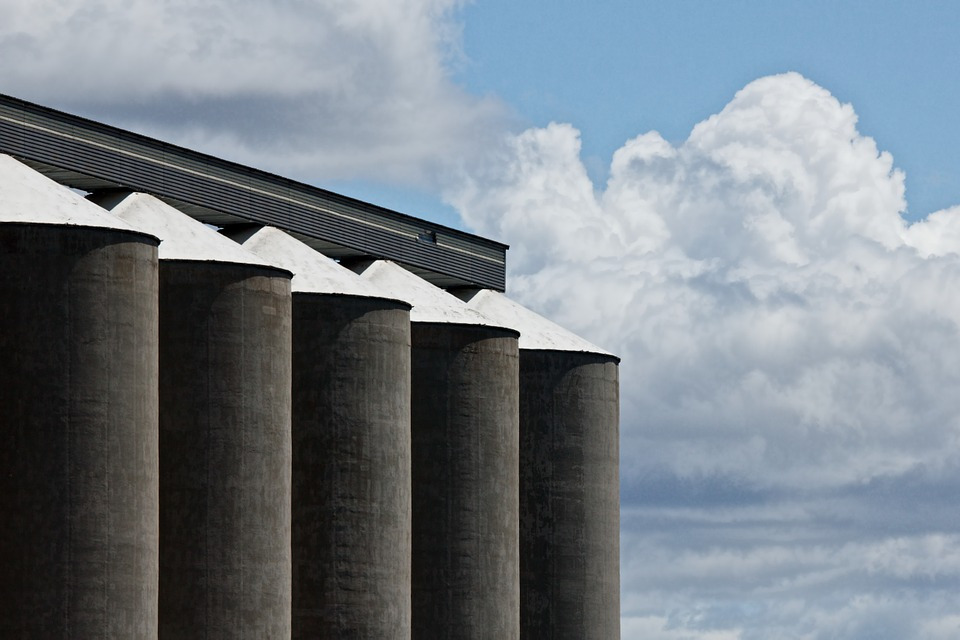
Among the numerous safety hazards farmers face are those associated with grain bins and silos. Accidents involving grain bins and silos can cause severe injuries and death. Last year, accidents in Grant Park, Illinois and North Manchester, Indiana, resulted in farm worker fatalities.
Why are Grain Bins so dangerous? Workers can quickly become buried by and suffocate in grain while walking, or trying to clear grain that builds up inside the bin. The area underneath the surface of the grain can be hollow or fill with air, caving in once the worker adds their body weight to the “bridged” surface. Workers sink into grain like quicksand, sometimes in merely a few seconds, resulting in suffocation. Grain dust poses health hazards and increases the risk of explosions. Those working on, in and around grain silos and bins can also be exposed to fall hazards related to the use of ladders and entrances. Additional agricultural equipment used in conjunction with grain, such as augers, can pose amputation hazards.
The OSHA Grain Handling Health and Safety Topics Page is a great resource for agricultural workers to learn more about how grain bin and silo accidents can be avoided. A full breakdown of standards is available on that page.
Steps employers must take to protect workers that enter storage bins include:
- Turning off and locking out any equipment that causes movement of grain. Machines that move grain out of a bin or silo create suction that pull workers into the grain and cause suffocation.
- Prohibit all employees from walking on grain to make it flow.
- Provide workers with body harnesses and lifelines.
- Provide all workers entering storage bins with an observer who tracks their movements and is prepared to step in and provide rescue assistance.
- Prohibiting workers from entering silos under grain that has built up overhead and could collapse and crush or bury them.
- Testing the air within the structure prior to allowing workers inside. This is to determine the risk of explosion as well as to ensure that sufficient oxygen is present for workers to breathe.
- Providing venting that can reduce combustible and toxic gas levels so that their presence is at non-hazardous levels when workers enter the structure.
- Having permits issued each time a worker enters a grain bin or silo. The permit must certify that all of the above precautions have been taken.
Visit https://www.osha.gov/SLTC/grainhandling/ for additional standards, including those intended to prevent dust explosions and fires.