

As an employer, HR manager, or safety professional you may wonder, “What PPE should I provide for my employees?” From the first day on the job until the last, PPE protects you and your employees. The layer of protection between a hazard—any hazard—and the body is the first line of defense against injuries. Here are some ways to determine what PPE to provide.
Determine the Hazards
First, employers are required to perform/ conduct a “Hazard Assessment” of the workplace to determine hazards that affect their employees. Then, they must certify this information and make it available to all employees for review. Certification is simply acknowledging in writing that an assessment was performed and what hazards were found. A certification must be signed by a supervisor or safety professional.
When assessing your workplace, get started by finding the necessary document. Then, add the date of the assessment and list all work areas, departments, positions, and any other information you feel are important to add. List hazards related to each as you conduct your assessment. You can learn about how to conduct a hazard assessment here.

Create a PPE Program
Once this is done, take the information and create a PPE program for your business. Understanding people, processes, and process flows of a job will help you learn what kinds of equipment your employees need. Look at how people conduct their work and where they are likely to get injured. Then, select types of PPE that will protect employees while still allowing them to do their jobs. Some employees may already have their own PPE, so just check it and make sure it is suitable.
Outline requirements for what types of PPE to use, when to use them, and where to store/retrieve them when not in use. Then, post this information where your employees can access it. Everyone in your organization must know about the PPE program and be accountable for following it. No matter what, supervision at every level must manage the expectation of the people wearing the PPE.
Make sure managers know the job function(s) requiring PPE and what to do when PPE becomes damaged or needs to be replaced. Managers can also provide insight on when the PPE program needs to change or job functions change, requiring a new hazard assessment. Things will change, and your plan needs to be flexible to accommodate those changes.
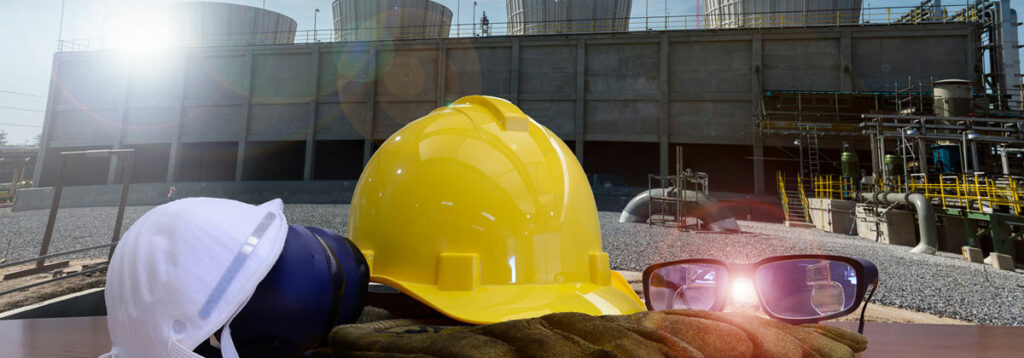
Work from Head to Toe
As you ask, “What PPE should I provide,” taking a systematic approach can help you determine what workers need. Work from head to toe, analyzing each part of the body that may be vulnerable to workplace injuries.
Head
Head protection is necessary for building and maintenance functions, confined space operations or construction and electrical type jobs. In these jobs, many types of injuries can occur from contact with beams, pipes, fixed objects, machine parts, falling objects or exposures to electrical wiring or components. You must look at the risks and ask yourself, “Can the hazard be eliminated, or do we need hard hats, bump caps or other methods of protection?”
Eyes
When considering eye protection, look for activities such as grinding, sawing, deburring, drilling or computer work. These produce dust, flying particles, chemicals, sparks and glare which can injure workers’ eyes. As you ask, “What PPE should I provide?” decide if the hazard can be eliminated or if you need safety glasses, goggles, face shields or other methods of protection.
Face
Some industries require face protection. Assess whether employees need face protection during cleaning, painting, cooking, laundry work or the pouring of chemicals or molten metals. Some other hazards to consider are extreme heat or cold, irritants or hazardous chemicals. Can the hazard be eliminated, or do you need to provide safety glasses, goggles, face shields or other methods of protection?
Skin
Protecting the skin is essential. Whether charging batteries, using dip tanks, cutting with a saw or installing fiberglass, employees need protection from skin irritants. Consider chemical splashes, heat and cold extremes, the sharp or rough edges and the irritation in certain chemicals as you ask, “What PPE should I provide?” The big decision is, can the hazard be eliminated, or is an apron, long sleeves, raingear, welding leathers, or other equipment needed?
Hands and Arms
Many industries involve work that can injure hands or arms. Evaluate hand and arm protection for baking, cooking, grinding, welding, material handling, sanding, sawing or hammering. Protect hands and arms from tools and materials that can scrape, bruise, or cut—causing irritating chemicals or contact with blood or other blood-borne pathogens. Decide whether the hazard can be eliminated or if employees need leather gloves, rubber gloves, single-use plastic gloves or other methods of protection. Select chemical and liquid-resistant or leak-resistant materials when dealing with hazardous liquids or chemicals. Go for temperature protection when workers face heat/ cold extremes. Sturdy gloves that protect against abrasions and cuts or provide slip resistance to aid in the carrying of materials is a must for some jobs.
Feet and Legs
Feet and leg protection often gets overlooked. In every industry employers must consider appropriate footwear and leg protection as they ask, “What PPE should I provide?” Whether they work in building maintenance, construction or demolition, landscaping, working in a foundry or processing food products, employees must wear adequate PPD. Look for non-slip, study footwear to guard against slippery surfaces and impact from heavy objects. Also watch for tasks that expose employees’ feet to crushing and pinch points. Can you eliminate the hazards, or do you need to provide chaps, long pants or gators? Require toe and foot and toe protection such as shoes or boots with puncture/chemical-resistant and anti-slip soles. Depending on the job, employees’ feet and leg PPE may also need to protect against heat/cold, electrical shock and heavy objects.

Choose Your Supplier
Personal protective equipment comes in many types, brands, colors and sizes. Choose a supplier that knows your industry so they can help you get the right types of PPE. Make sure your supplier is reputable so you can rely on them to provide what you need when you need it. Invest in quality PPE for your workers instead of buying something cheap. High quality items will last longer, be more comfortable to use, and will help employees do their jobs better.
Invest in Safety
As you ask, “What PPE should I provide?” think of personal protective equipment as an investment in the health and safety of your employees. Keeping a protective layer between your employees and a hazard is worth the cost and effort. Reinforce the importance of PPE in your company and invest in safety today.
Learn More
Still not sure what steps to take? The National Safety Education Center offers helpful courses that can teach you about PPE. Sign up for OSHA #510 Occupational Safety and Health Standards for the Construction Industry or OSHA #511 Occupational Safety and Health Standards for General Industry and equip yourself to be a safety leader at work.
For more information see OSHA’s Publication on Personal Protective Equipment.
The National Safety Education Center (NSEC) is one of 26 OSHA Training Institute Education Centers in the nation. These education centers are a national network of non-profit organizations authorized by OSHA to deliver occupational safety and health training to public and private sector workers, supervisors and employers. Our partnership, which consists of Northern Illinois University and the Construction Safety Council, allows us to teach courses in OSHA’s Region V (Illinois, Indiana, Michigan, Minnesota, Ohio and Wisconsin). For more information, visit www.nsec.niu.edu.